
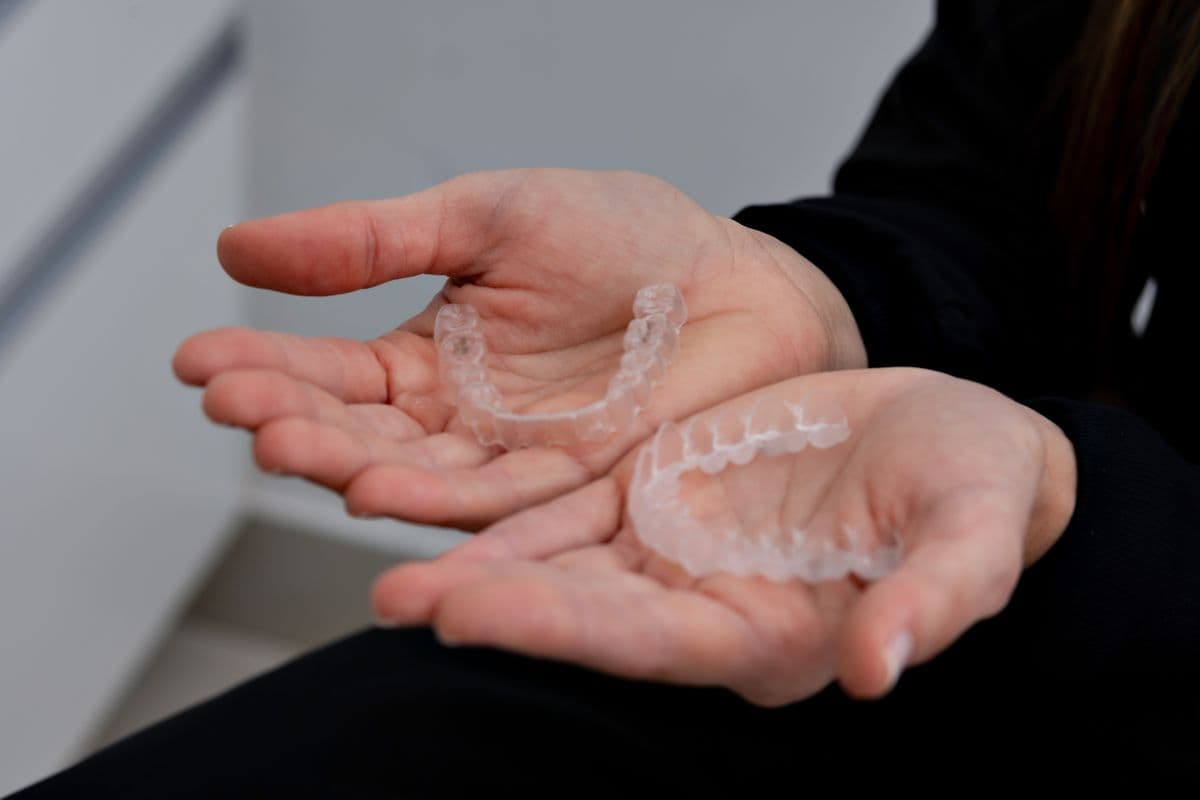
Invisalign has made orthodontic treatment genuinely appealing to adults who never imagined themselves in braces. The clear, removable aligners are nearly invisible, so you can straighten your teeth without the metal-bracket look that holds so many grown-ups back. Plenty of our patients are in their thirties, forties, fifties and beyond, finally addressing the crowding or shifting they were told to live with years ago. Before you begin, though, there are a few things worth understanding so your treatment goes smoothly and your results last.
How Invisalign Actually Works
Invisalign uses a series of custom-made clear aligners, each one slightly different from the last. You wear each set for one to two weeks, then move to the next in the sequence. Every aligner nudges specific teeth a fraction of a millimeter, and over the full series those small movements add up to a straighter, more even smile. Because the trays are smooth medical-grade plastic, there are no wires to poke your cheeks and no brackets to trap food. You take them out to eat and to clean your teeth, then pop them right back in.
Compliance Is the Single Biggest Factor
This is the part people underestimate. Aligners must be worn 20 to 22 hours per day, and they only come out for eating, for drinking anything other than water, and for brushing and flossing. The aligners cannot move your teeth while they are sitting in a case on your nightstand. Patients who consistently dip below 20 hours of daily wear see slower progress and often need extra aligners to reach their goal. The fix is simple: build a routine. Take the trays out for a meal, brush, and put them right back. Many patients set a quiet phone reminder for the first few weeks until it becomes automatic.
What Invisalign Can and Cannot Correct
Treatment usually runs 6 to 18 months depending on how much movement your case requires. Invisalign handles a wide range of issues well, including crowding, gaps and spacing, and many bite problems. More significant skeletal discrepancies, where the jaws themselves are misaligned, may still call for traditional braces or, in some cases, a referral for orthodontic surgery. During your consultation, Dr. Hu can show you a 3D digital simulation of your expected outcome, so you see roughly where your teeth will end up before you commit to anything.
Understanding the Cost
Cost is a fair concern, and it helps to know the variables. Adult Invisalign treatment typically ranges from about $3,000 to $7,000 depending on how complex your case is and how many aligners it takes. Many dental insurance plans now cover clear aligners at the same rate they cover traditional braces, so it is worth checking your orthodontic benefit. Flexible spending accounts and health savings accounts can usually be applied as well, and we are happy to walk you through payment options that spread the cost across your treatment rather than asking for it all up front.
The Comfort Factor
A common question from nervous patients is whether Invisalign hurts. You will feel pressure and some tenderness for a day or two each time you switch to a new aligner, which is the sensation of your teeth moving. That feeling fades quickly and is usually manageable with a soft-food day. We never rush this process. If you ever feel anxious in the chair, we slow the pace, explain exactly what is happening next, and you can raise your hand at any point to pause so you stay in control of the visit.
The Technology Behind It
The planning behind Invisalign has come a long way. Digital scanning has replaced the messy putty impressions of the past, so we capture your bite with a small wand and a few minutes of comfortable scanning. Sophisticated software then maps every movement, and refinement aligners are typically built into the plan to fine-tune the final result. Dr. Hu is a Platinum Invisalign Provider, which reflects a high volume of completed cases and deep familiarity with clear-aligner planning. Patients across Harrisonburg, Rockingham County, and the wider Shenandoah Valley benefit from that experience.
A Harrisonburg Note
We see a real mix of adult Invisalign patients here in the Valley, from local college faculty and staff to longtime Rockingham County residents who simply decided it was their turn. The removable trays fit easily into a busy life, whether your days run through downtown Harrisonburg or out toward the county. And because our office sits in the Sentara RMH medical corridor on Medical Avenue, follow-up visits are quick and convenient to fit between everything else you have going on.
Retention: Protecting Your Investment
Finishing your aligners is not quite the end of the story. Teeth have a natural tendency to drift back toward their old positions, so retention matters just as much as the active treatment. Most patients wear a retainer afterward, either a thin wire bonded behind the front teeth or a removable clear retainer worn mostly at night. Think of it as the maintenance that keeps the result you worked for. Dr. Hu will recommend the retention approach that fits your case and your habits.
Common Questions, Answered
Will people notice? Most do not, unless they are looking closely. Can I drink coffee? Take the trays out first, since hot and colored drinks can warp and stain them. What if I lose an aligner? Move to your next set or back to your previous one and call us, and we will sort out the timing. How often do I come in? Usually every six to eight weeks for a quick check, far less frequent than the monthly tightening of metal braces.
If you have been quietly wishing your smile were straighter, an Invisalign consultation is a low-pressure way to learn what is realistic for you. We will take the time to answer your questions, show you the projected result, and lay out the honest details on timeline and cost. When you are ready, reach out to our Medical Avenue office and we will be glad to help you take the first step.