
If you floss by snapping the string straight down between your teeth and yanking it back out, you are far from alone, but you are also not getting the full benefit. Studies suggest that over 60 percent of adults who say they floss regularly use a technique that leaves a good deal of plaque behind. The encouraging news is that proper flossing is one of the highest-impact habits in preventive dentistry, and once you learn it, it takes under two minutes a day. Here is how to do it well, which tools actually help, and why this small habit matters more than most people think.
Why Flossing Matters in the First Place
Your toothbrush does a fine job on the broad front, back, and chewing surfaces of your teeth, but it cannot reach the tight spaces between them or the spot just under the gum line. Those areas are exactly where plaque loves to settle and where cavities and gum inflammation tend to start. Flossing is the only everyday tool that physically clears that bacterial film from the surfaces your brush misses, which is roughly a third of each tooth. Skip it, and you are leaving a third of your mouth uncleaned.
The Technique Most People Get Wrong
The correct method starts with about 18 inches of floss wound around your middle fingers, leaving roughly two inches of working length stretched between your hands. Guide the floss gently between two teeth using a back-and-forth sawing motion. Never snap it straight down, because that can cut into the gum tissue and cause the very bleeding people blame on flossing. Once the floss slips past the tight contact point, curve it into a C-shape that hugs the side of one tooth, slide it just beneath the gum line, and move it up and down along the tooth surface two or three times. Then wrap the C-shape around the neighboring tooth and repeat. As you move along, advance to a clean section of floss so you are not dragging the same bacteria from tooth to tooth.
Water Flossers: Helpful, but Not a Full Replacement
Many patients ask whether a water flosser can take the place of string floss. The honest answer is that water flossers are an excellent supplement but not a complete substitute. A Waterpik-style device is great at flushing debris out of deep pockets, around braces, and under bridges, and many people with gum issues love them. What it does not do is provide the mechanical scraping that string floss delivers right against the tooth surface. For patients with arthritis, limited hand mobility, or a strong gag reflex, a water flosser paired with small interdental brushes is a very effective combination and far better than skipping the job entirely.
Floss Picks: Better Than Nothing
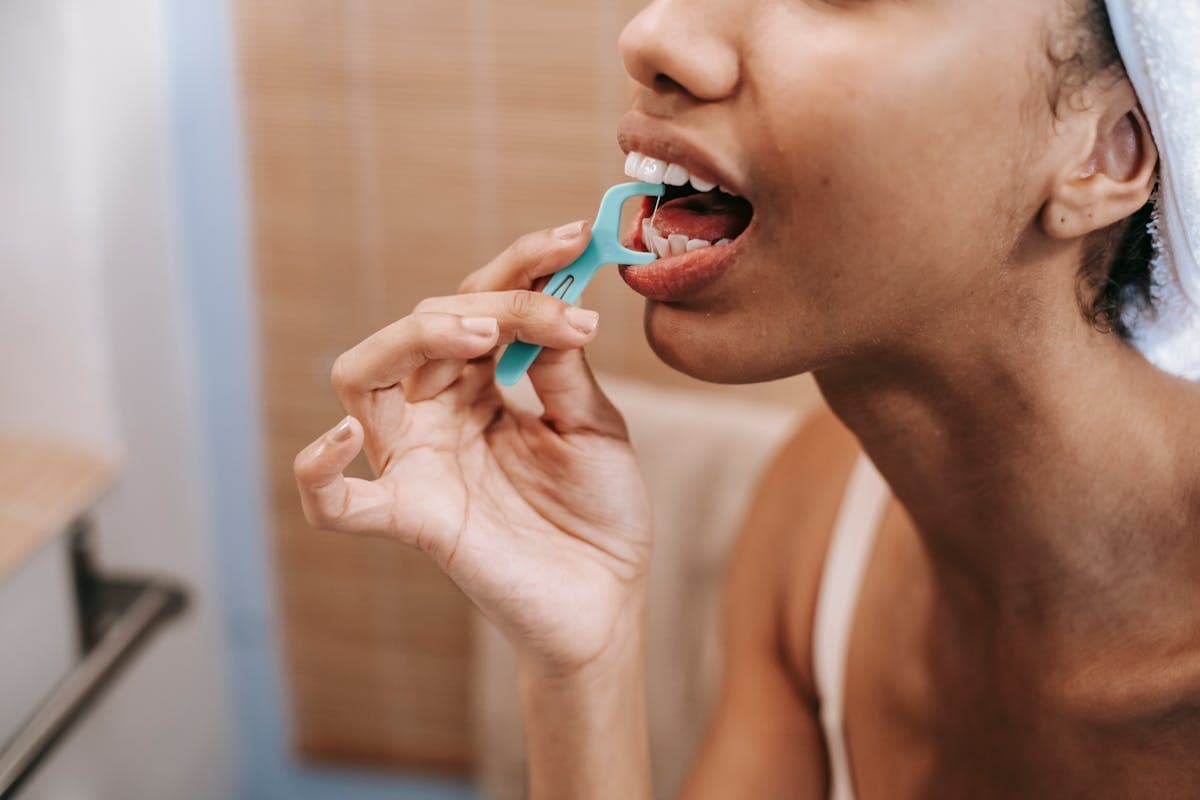
Floss picks, the little Y-shaped plastic tools with a short strand of floss, are convenient and certainly better than not flossing at all. Their limitation is the fixed length of floss, which makes it hard to use a clean section for each tooth and can move bacteria from one site to the next. If picks are what you will actually use, that is what matters most, so reach for a fresh pick every few teeth and still try to curve the floss into a C-shape against each tooth rather than just popping it up and down.
Timing: Floss Before You Brush
The order matters more than most people realize. Ideally, floss before you brush. Flossing first loosens the plaque and debris packed between your teeth, which then lets the fluoride in your toothpaste reach those between-the-teeth surfaces instead of being blocked out. Nighttime is the most important session of all. Flossing before your last brushing clears away the food particles that would otherwise feed bacteria for the eight or so hours you are asleep, which is when your mouth produces the least protective saliva.
Bleeding Gums Are a Signal, Not a Stop Sign
A lot of people quit flossing because their gums bleed, assuming they are doing harm. Usually the opposite is true. Bleeding is a sign of inflammation from plaque that has been sitting too long, and in most cases it improves within a week or two of consistent, gentle flossing as the gums get healthier. If bleeding is heavy, persistent, or paired with pain, that is worth mentioning to us so we can take a look.
Teaching Kids to Floss
For children, flossing should begin as soon as two teeth touch each other, often around age two to three. Until then there are no surfaces hidden from the brush. Parents will need to floss for their children until roughly age eight to ten, when most kids develop the fine motor control to manage it themselves. Floss picks can be a gentler starting point for small hands, and making flossing a shared family routine rather than a lonely chore goes a long way toward making the habit stick for life.
A Quick Word for Valley Patients
We see plenty of Harrisonburg and Rockingham County patients who brush diligently but tell us they never quite got the hang of flossing. There is no judgment in that. It is genuinely a skill, and a two-minute, in-person demonstration usually clears up years of guesswork. Whether you are a college student squeezing care into a packed semester or a longtime Valley resident, our hygiene team is glad to coach you through the technique on a model and then on your own teeth.
Common Questions
How often should I floss? Once a day is the goal, ideally at night. Does the type of floss matter? Waxed, unwaxed, tape, it is mostly personal preference; the best floss is the one you will use. What if my teeth are too tight for floss? Tell us, because that can signal contacts that trap food, and we can recommend the right thin floss or tool. Is one good flossing better than three rushed ones? A single thorough, correct session beats several quick snaps any day.
If you have ever wondered whether you are flossing the right way, you probably are not, and that is completely fixable. Bring it up at your next visit, or reach out to our Medical Avenue office to schedule a cleaning, and we will happily show you a technique that finally makes flossing feel worthwhile.